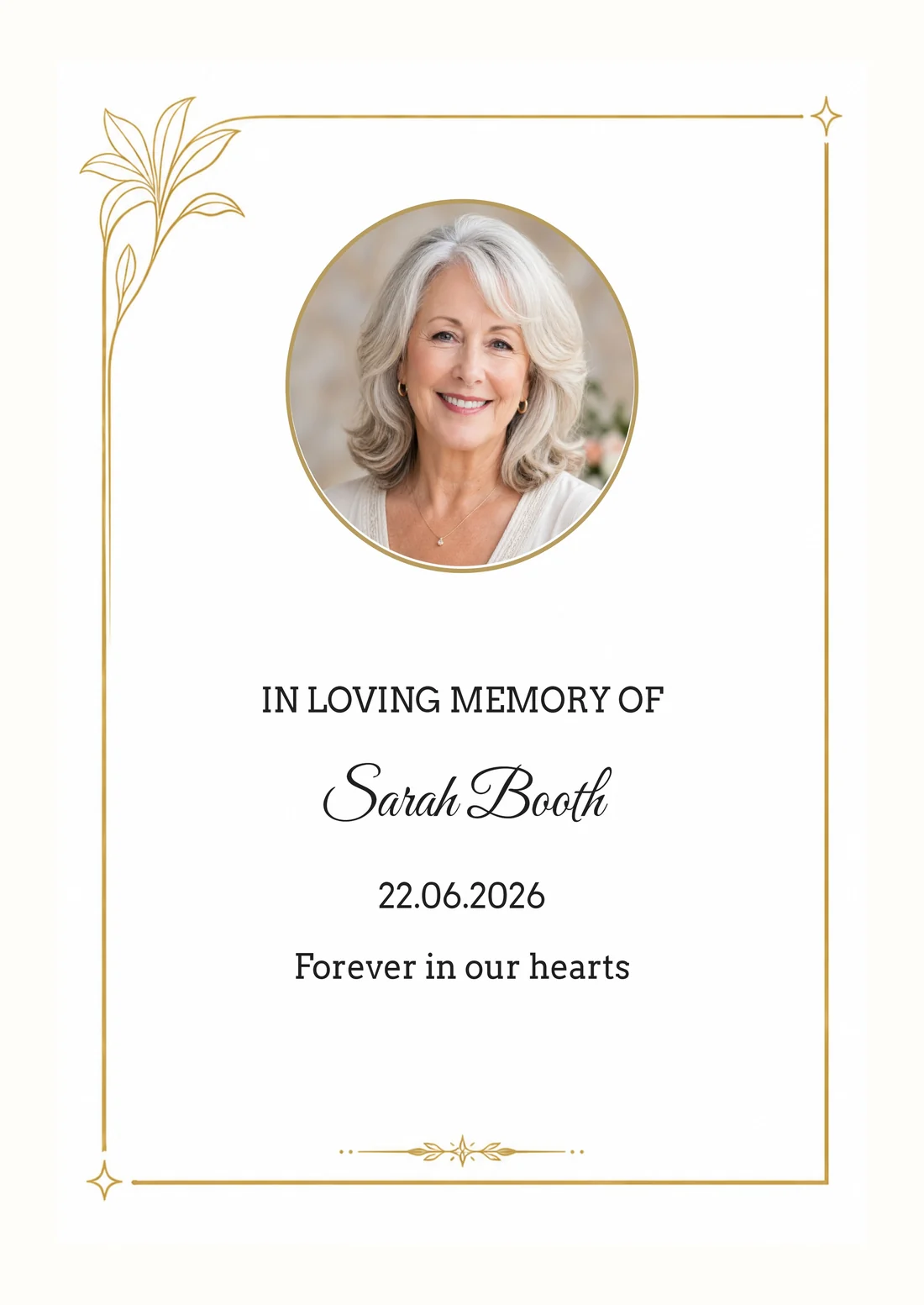
Use these examples as starting points. The strongest final message usually includes one detail that is specific to the person, couple or family.
Short condolence messages
I am so sorry for your loss. Thinking of you and your family.
Sending love and strength to you during this difficult time.
Please accept my deepest condolences.
I am holding you in my thoughts and remembering them with great affection.
There are no easy words, but I want you to know I am here.
Messages that include a memory
I will always remember their warmth and the way they made everyone feel welcome.
Their kindness had a real impact on me, and I feel fortunate to have known them.
I keep thinking about the laughter they brought to every gathering.
They will be remembered for the care they showed to so many people.
One of my favourite memories is [brief memory]. I hope it brings some comfort to know how fondly they are remembered.
Messages offering support
I am here to listen, help with practical things, or simply sit with you.
I would like to bring dinner on Thursday if that would be helpful—there is no need to reply immediately.
Please do not feel you have to manage everything alone. I am available whenever you need me.
I will check in again next week. You do not need to respond, but I want you to know you are not forgotten.
If it would help, I can assist with [specific task].
Messages for colleagues or community members
Their contribution to our team will be remembered with great respect.
We are deeply saddened by the news and are thinking of everyone who loved them.
They made a lasting difference to this community and will be greatly missed.
It was a privilege to know and work alongside them.
Please accept our sincere condolences from everyone at [team or organisation].
Write with care, not pressure
Avoid trying to explain the loss, compare it with your own experience, or tell someone how they should feel. Phrases such as “everything happens for a reason” can feel dismissive even when well intended.
Gathering tributes for a memorial book
- Ask for one specific memory rather than a general tribute.
- Invite contributors to describe a quality they admired.
- Include messages from different parts of the person’s life.
- Preserve the contributor’s own voice and phrasing.
- Check names, dates and relationships carefully before printing.
It is okay for a memorial book to contain a mixture of very short condolences and longer stories. The range often reflects the many different ways a person mattered to others.